
Vitamin pouches
Single-vitamin and selected nutrient concepts with an agreed assay plan.
B vitamins · vitamin C · vitamin D3
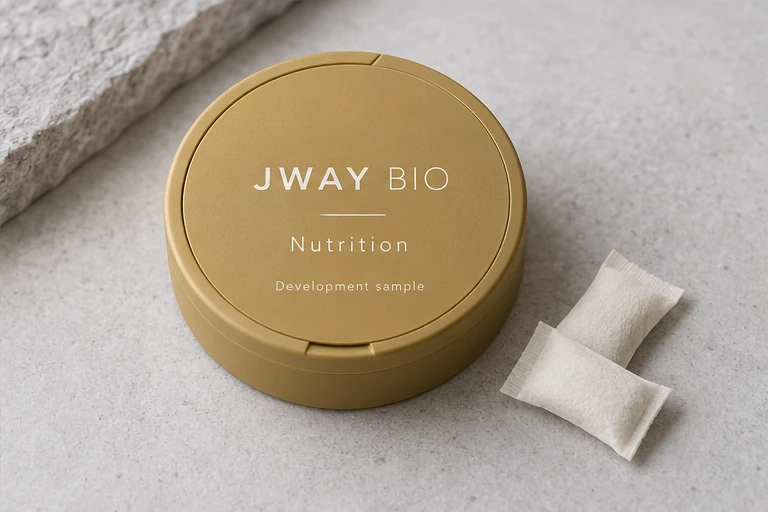
Product development overview
Vitamin pouches are developed around selected nutrient specifications rather than a generic “vitamin” label. The source program includes B vitamins, vitamin C, vitamin D3 and vitamin B12 options for consideration in a plant-fiber pouch.
The nutrient form, planned declared amount, stability behavior and test method all need review. A raw ingredient’s vitamin content does not automatically equal the finished product’s declared content through shelf life. Some nutrients create sensory or manufacturing constraints that should be resolved during development.
What to decide in the brief
Select nutrient forms and declaration targets; assess compatibility and taste; agree the finished-product assay and stability requirements.
Bring a clear target market and distinguish essential requirements from preferences. An initial discussion can begin with a product idea; a commercial order needs a confirmed formula, specification, packaging and document scope.
Development & order specifications
These are source-program reference options, not a finished SKU specification. The approved quotation, sample and written product record define the actual order.
| Product type | Nicotine-free functional oral pouch development |
|---|---|
| Development direction | B vitamins, vitamin C, vitamin D3 |
| Pouch material | Plant-fiber base; material specification agreed per project |
| Format | Mini or Swedish-style development options |
| Fill weight | 0.3–1.2 g development range; final target and tolerances confirmed |
| Can configuration | Source range: 20–24 pouches; custom configuration by quotation |
| Flavor & sweetness | Mint, fruit, coffee and bespoke sensory development; formula-specific |
| Private label scope | Formulation, flavor, pouch format, can, label and carton |
| Starting quantity | Source reference: 5,000 cans per formula/flavor; quotation confirms actual minimum |
| Sampling | Source reference: from 5 working days after relevant confirmation; project schedule applies |
| Production planning | Source reference: 3–5 weeks after approvals; confirmed for the order |
| Shelf-life planning | Source reference: 24 months under stated storage conditions; finished-product evidence required |
| Quality records | Approved specification and agreed batch COA / document pack |
Your brand, with a defined production reference
The development team reviews ingredient compatibility, flavor and sweetness, pouch feel and packaging as one product. Send consolidated sample feedback so each revision has a clear purpose. Keep the final sample, formula version and artwork together when approving production.
For regulated or market-sensitive ingredients, review eligibility and proposed wording with the adviser responsible for your destination before commercial commitments. Ingredient information does not establish a finished-product benefit.
Use the vitamin pouches brief to define what matters to your brand. The project team can then confirm the feasible options and explain which documents, tests and commercial assumptions apply.
Questions about vitamin pouches
Can vitamin content be stated on the finished pack?
A nutrient declaration must reflect the approved formulation, appropriate analytical evidence and destination-market labeling requirements. The declaration is agreed during product and artwork review.
What information do you need for a vitamin pouches quotation?
Send the destination market, ingredient direction, flavor preference, pouch and can requirements, estimated volume and any fixed technical requirements. The team will review feasibility before confirming the commercial scope.
Can the packaging carry my brand?
Yes. The private label scope can include the can, label and outer carton. Packaging minimums, artwork and any special components are confirmed in the quotation.
How is the final product approved?
The project approval connects the formula, sample reference, product specification, agreed tests, can configuration and artwork version. Commercial production follows the agreed approval record.
Useful next steps
Build a well-defined product
Start a product brief
Share your market, formula direction, flavor and packaging requirements.
- Private label & OEM / ODM
- Formulation & sampling
- Manufacturing & documents