
Writing a functional pouch formulation brief that works
A formulation brief is a set of decisions the development team can evaluate. It should explain the intended product, measurable requirements and the sensory experience you want to test.
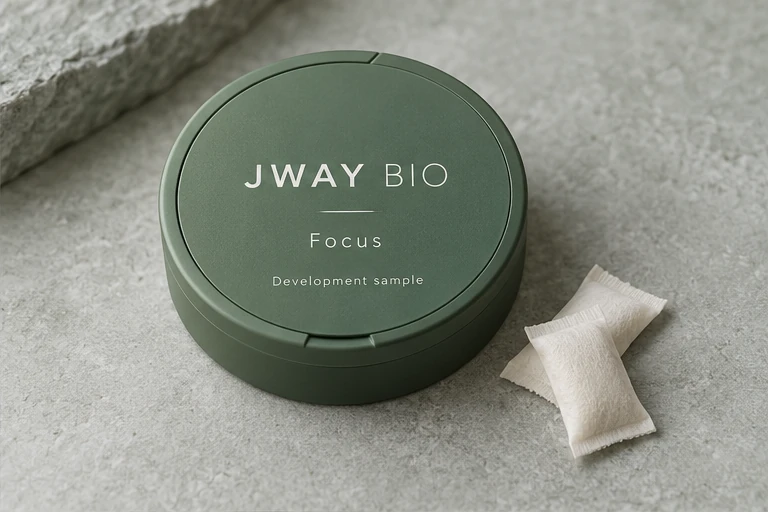
A formulation brief is a set of decisions the development team can evaluate. It should explain the intended product, measurable requirements and the sensory experience you want to test.
Define a single product purpose
Choose the primary product direction before assembling a long list of ingredients. Caffeine-led energy, caffeine-free focus, botanical relaxation and selected nutrient concepts create different technical questions. Say who will buy the product, where it will be sold and how the brand intends to describe it. Keep the commercial idea separate from any proposed benefit statement that needs supporting evidence.
Describe ingredients precisely
For each ingredient, specify whether the name is a requirement or an example. Botanical and mushroom extracts need more detail than a common name: identity, source material, extraction or powder form, carriers and analytical markers may matter. A nutrient brief needs the selected form and a proposed declaration target. Let the team flag sourcing, payload and compatibility questions before locking the ingredient list.
Treat flavor as part of the formula
Flavor intensity, sweetness, cooling and aftertaste interact with the ingredients and the pouch base. A mint reference and a fruity reference may create very different expectations for the same active blend. Record the sample conditions and ask reviewers to use a common evaluation sheet. Separate comments on aroma, initial taste, aftertaste and material feel to make the next revision useful.
Agree measurable acceptance criteria
Identify the attributes that matter at production scale: the ingredient specifications, any finished-product assays, fill weight, pouch integrity and pack configuration. The exact methods and tolerances should be agreed with the technical and quality teams. Avoid adding a target that has no practical test method or interpreting an ingredient supplier’s assay as a measurement of the finished product.
Make room for revision
Development often exposes tradeoffs between payload, taste, ingredient form and packaging. Define who reviews samples, how feedback is consolidated and which changes require a new quote or test plan. Keep each sample’s version number connected to the formula and review notes. That record lets a successful concept move into production without losing the decisions made during development.
Questions buyers ask
Do I need a complete formula before contacting JWAY BIO?
No. You can begin with a product direction, destination market and sensory reference. State which requirements are essential so the development discussion can focus on feasibility.
Can a reference product be used during development?
A reference can help communicate flavor, format or material feel. Describe which attributes matter and share any proprietary materials only after agreeing appropriate confidentiality terms.
Continue your project
Explore product programs · Review OEM / ODM services · Send your project brief
Make the guide useful for your project
Discuss the practical details.
Share your target market, product direction and the decisions you want to review.
Talk to the project teamAll buyer guidesQuality & documentsinfo@linkbiolabs.com